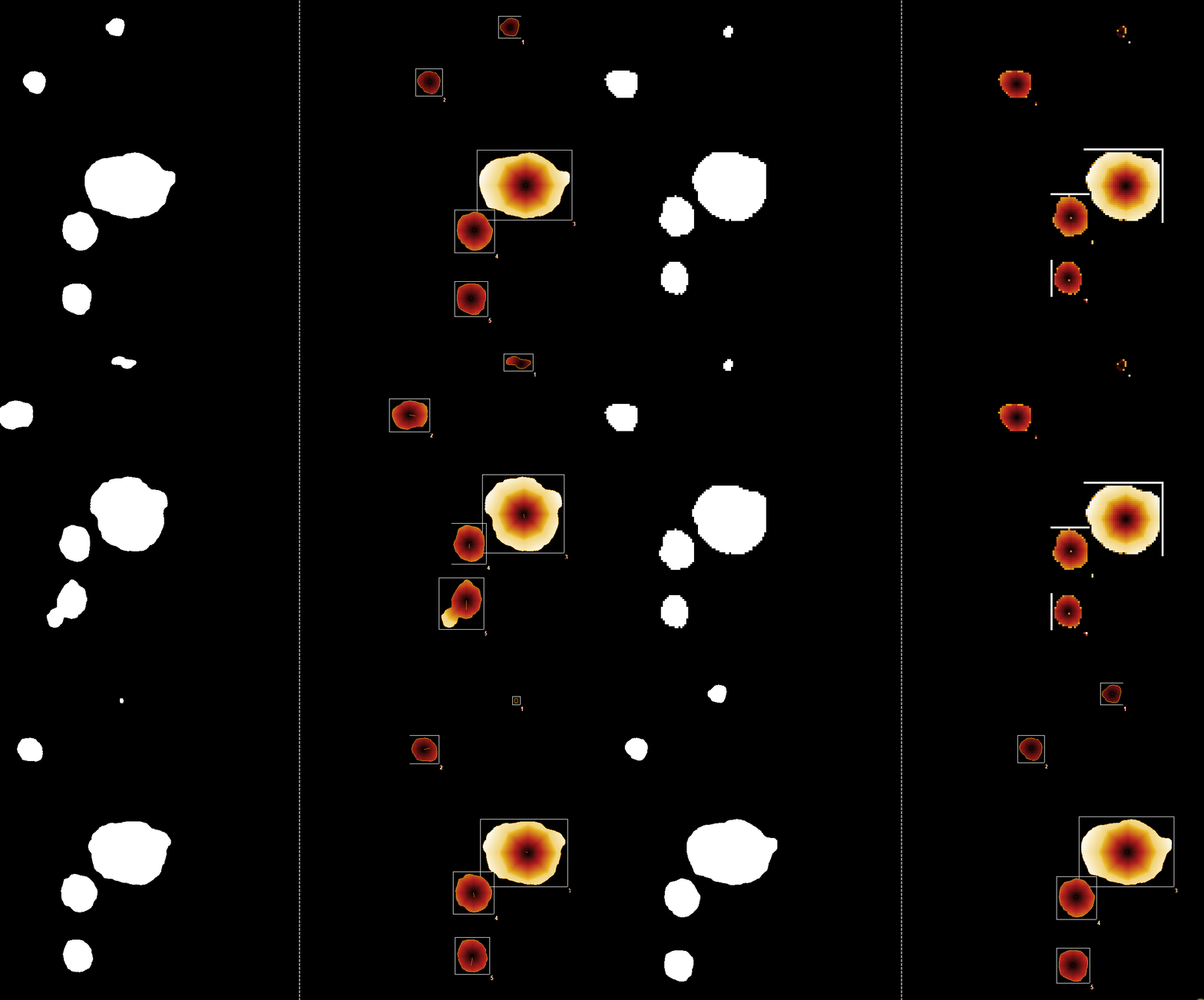
Image sequence analysis of binary objects
Calculates the morphological analysis and movement of binary objects in an image sequence. Each object is individually tracked over the entire image sequence. The input data must be a 3D volume, each plane on the Z axis corresponding to an image of the image sequence. Morphological characterization : surface area, ...
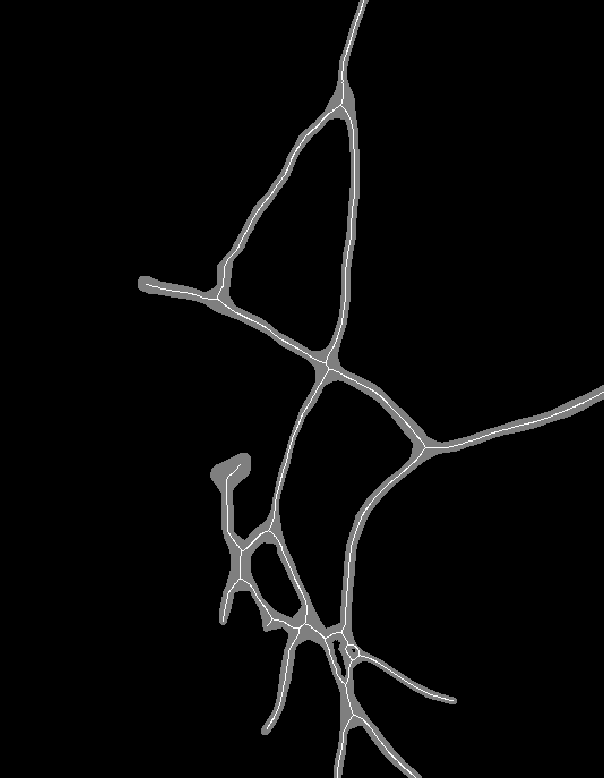
Skeleton by thinning
This plugin performs a skeleton computation by thinning algorithm. Topological thinning consists in gradually removing the points of the contour of the shape, while preserving its topological characteristics. If you use this plugin, please cite : Y.Y. Zhang ; P.S.P. Wang, A modified parallel thinning algorithm,...
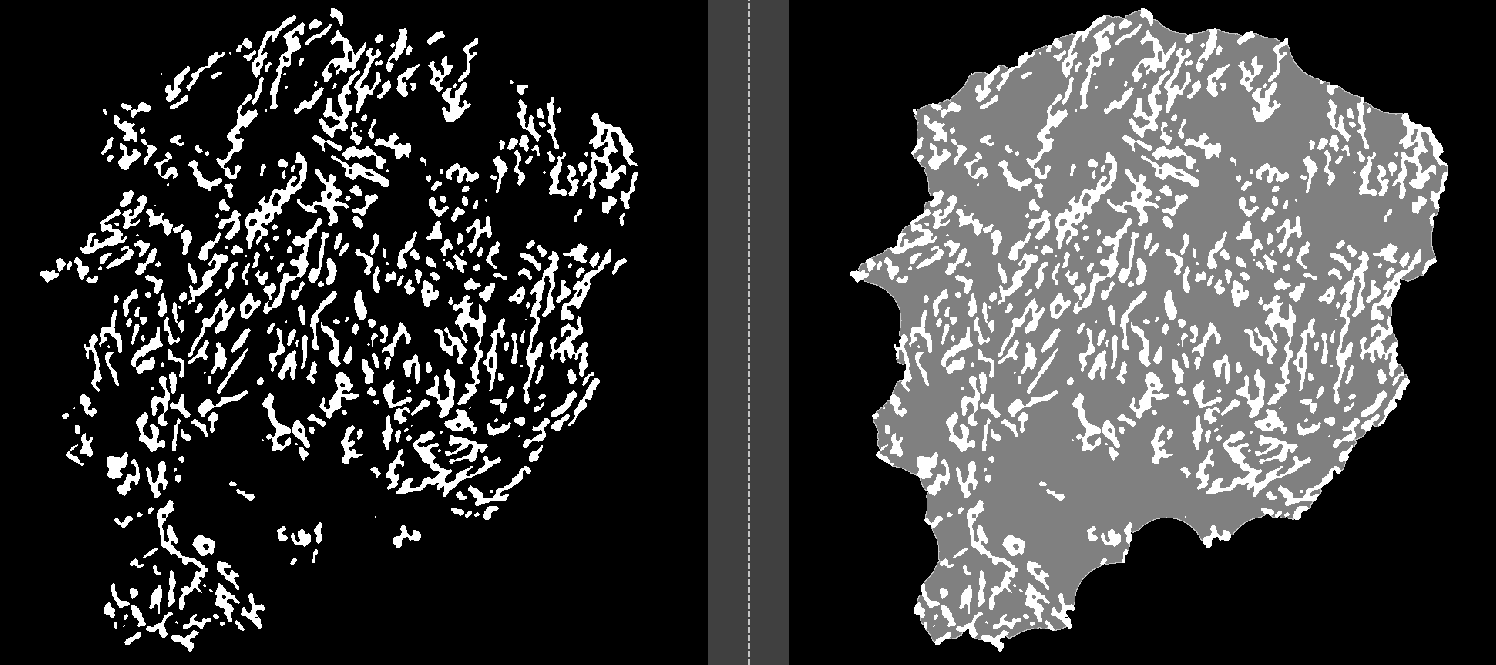
Extraction of porosity
Extraction of porosity from binary image or volume taking into account external roughness. This plugin operates with a morphological closing by a disc whose radius can be automatically estimated, followed by a geodesic morphological opening. This method is defined and used in [Moreaud et al. 2008]. Update 20220413...
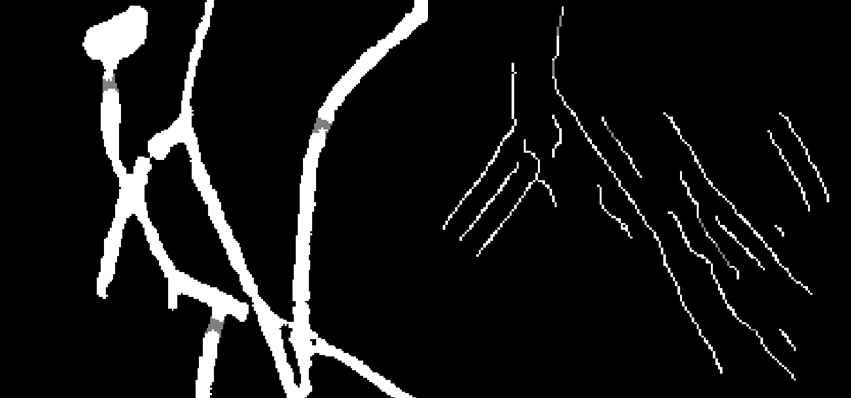
Closing ends
Considering edges of connected components as ends, each end pixel is linked to another end pixels if the two pixels belong to different connected components, and if the distance between the two pixels is less than a threshold. This operation can be useful in the case of disconnected filamentous objects and it is used...
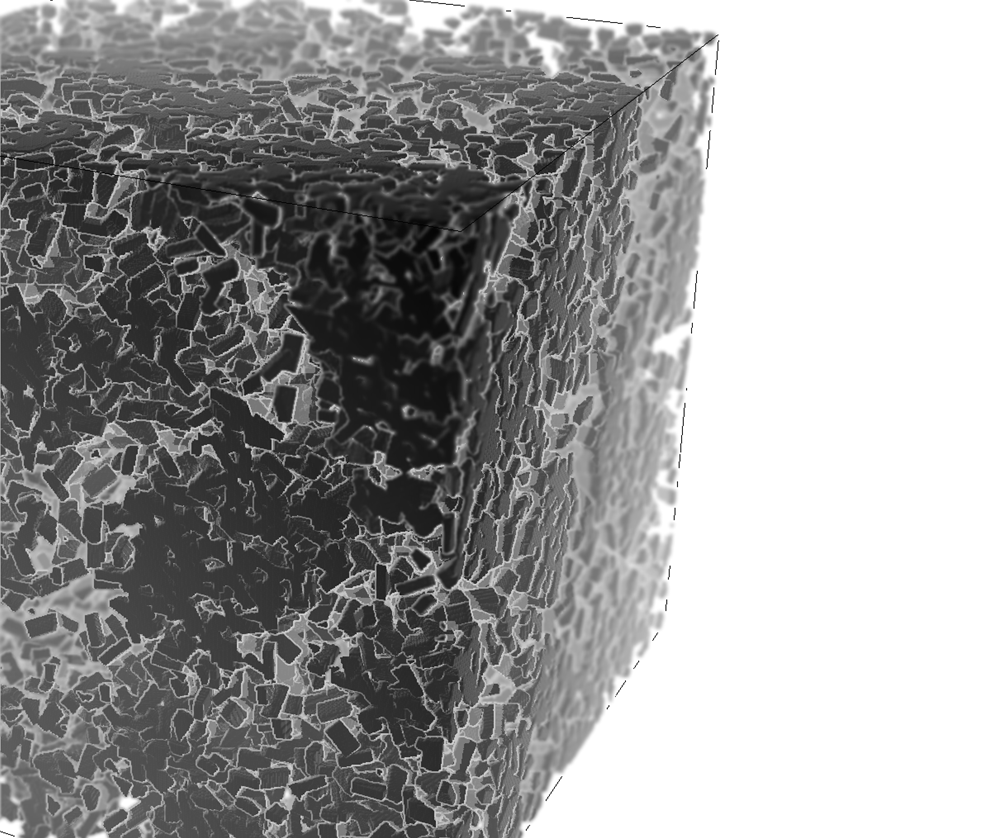
3D iso-surface rendering
3D iso-surface rendering on the CPU. The algorithm uses fast point projection and gradient calculation to give the impression of the visualization of an iso-surface with several 3D effects such as shadow and distance focus. The orientation of the volume can be changed by moving the mouse with right click and hold.
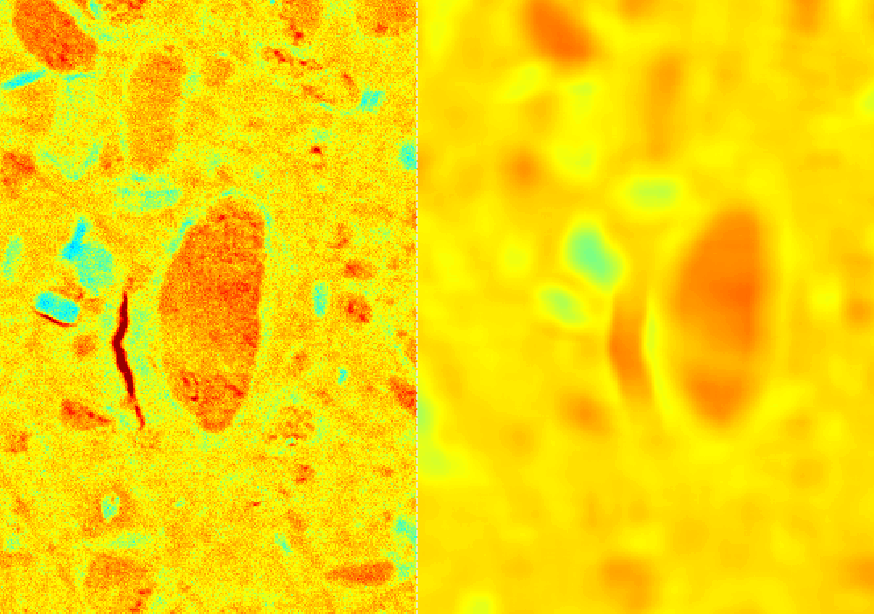
Box filter
Local mean filter using summed area tables* for computation with o(1) complexity. *F. C. Crow, “Summed-area tables for texture mapping,” in Proc. ACM SIGGRAPH, 1984, pp. 207–212 Update: 20230912: addition of an iteration parameter. 20201204: support for image of type integer, float and double.
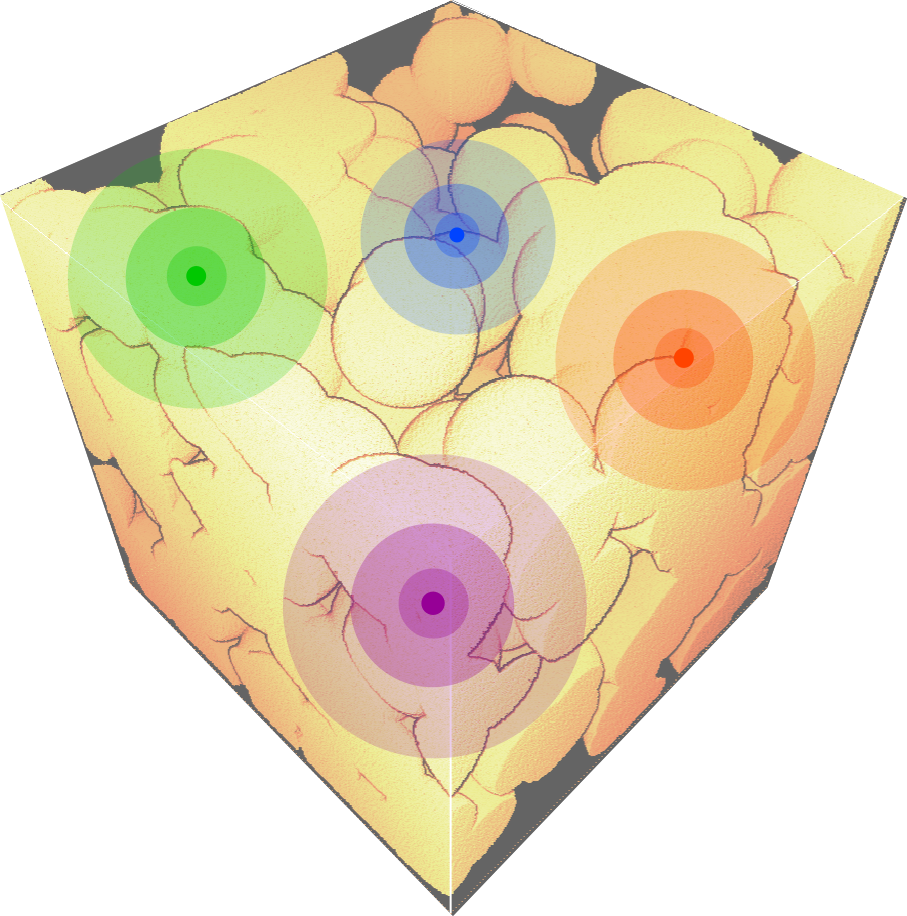
H-tortuosity
Computation of the H-tortuosity estimator for the characterization of 2D images and 3D volumes: a scalable topological descriptor providing a 3D map of mean tortuosities and final scalar values, the H-scalars, assessing the average variations of the morphological tortuosity with the scale.. This descriptor is based on...
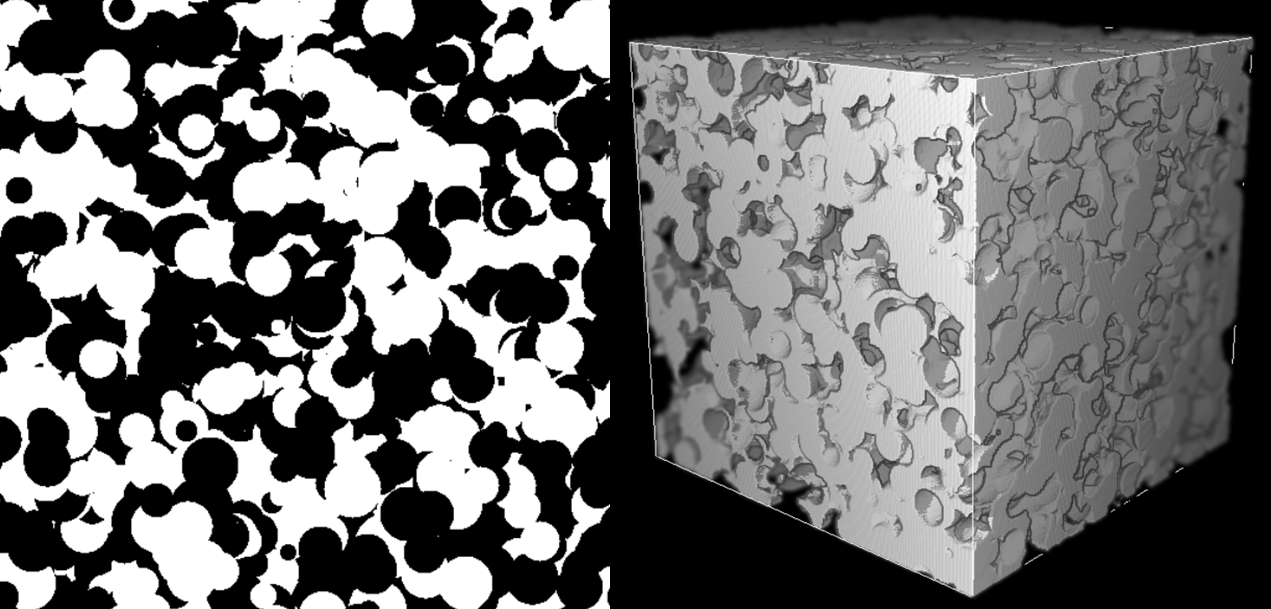
Colored dead leaves random model of spheres
Dead leaves random models [Matheron 1968] are used to simulate images with objects partly overlapping other objects. These processes are used for instance to model powders and estimate their composition or size distribution. This plugin allows simulations of spheres multicomponent version scheme [Jeulin, 1997]....
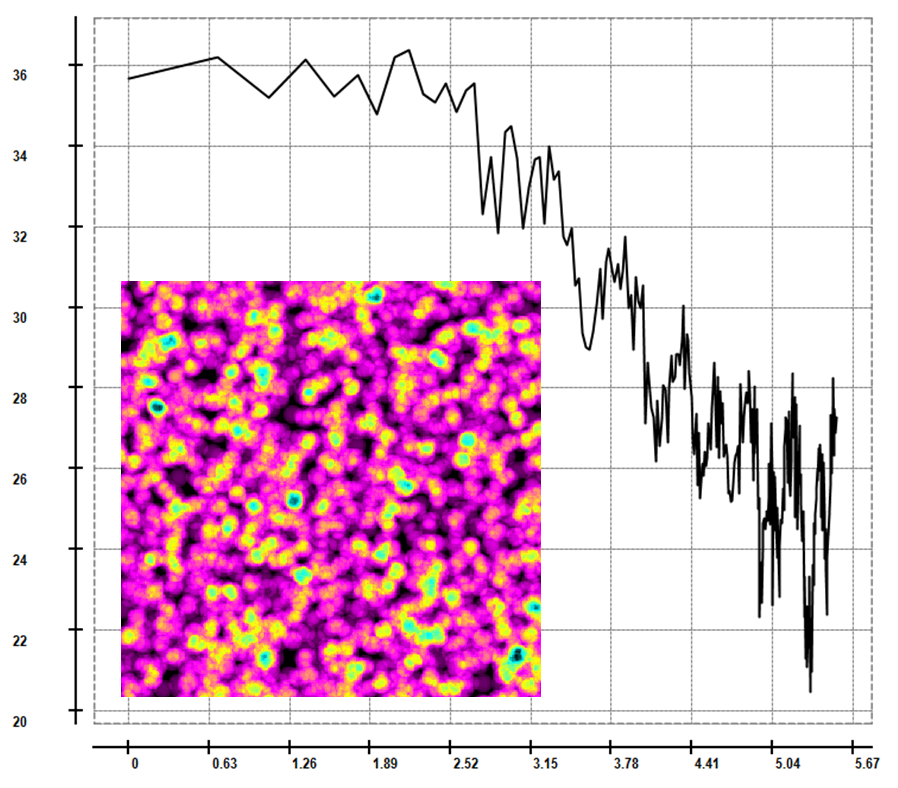
SAXS intensity from projection
Small Angle X-ray Scattering intensity computed from projections of a 3D volume. Projections should be of size of power of two. The computed diagram is proportional to the square of the Fourier transform modulus of the projection of the object along one axis. The calculation is prone to strong finite size effects....
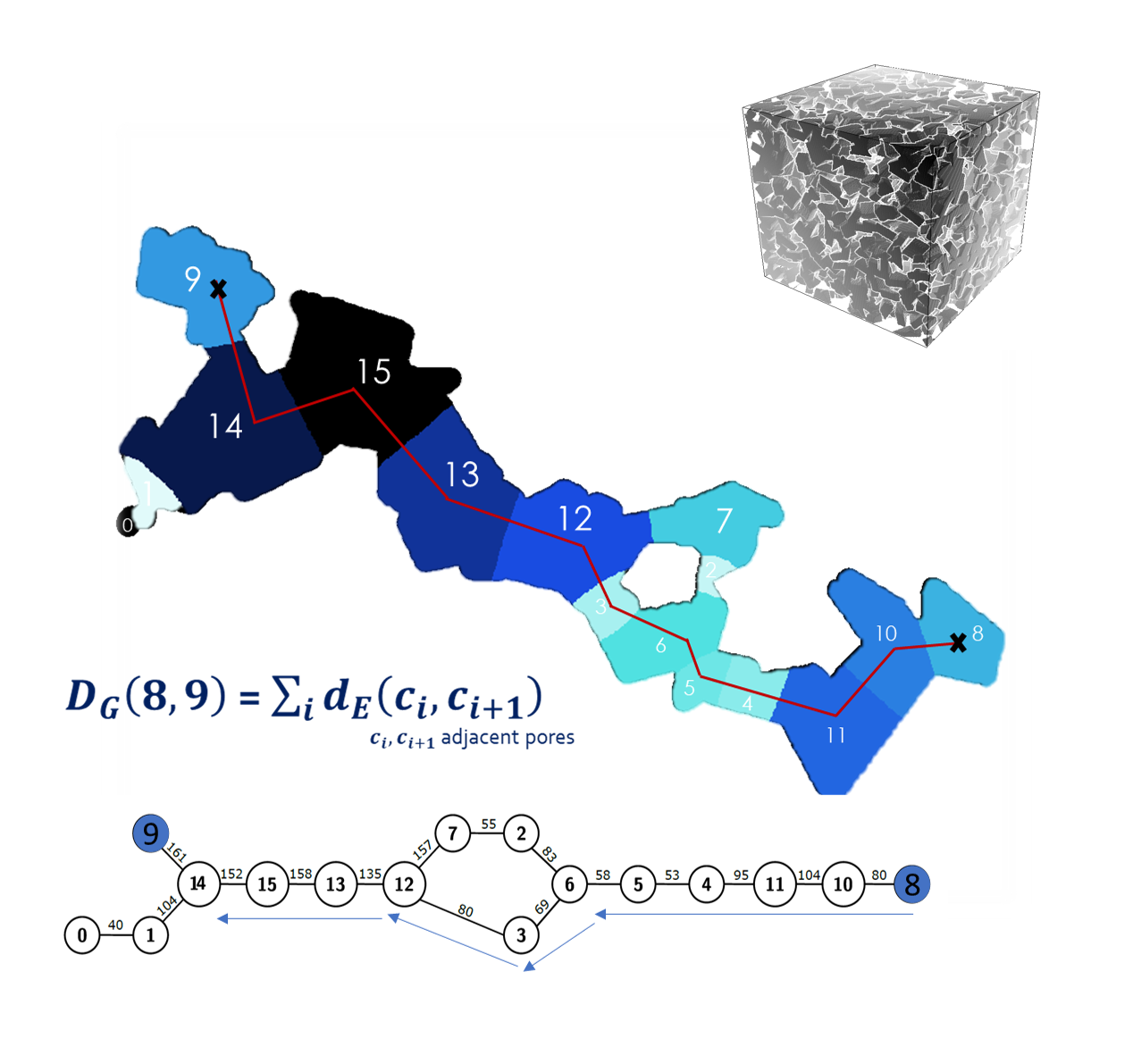
G-Tortuosity
Graph-based tortuosity proposes a new way of calculation of the M-tortuosity descriptor [1]. This algorithm is based on the PNP method [2] to extract pores and construct a graph from the porous phase of a binary microstructure. Through this scheme, pores are the nodes, distances between pores are the arcs between...
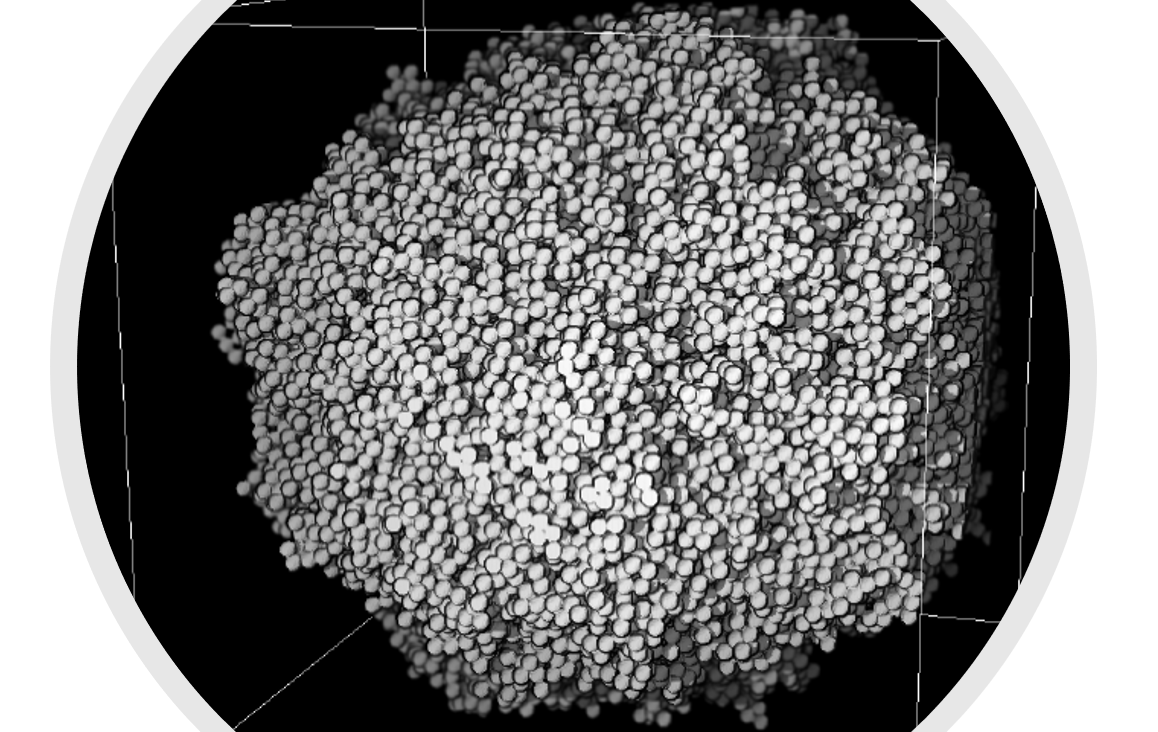
Aggregation model of spheres with controlled compactness
Aggregation morphological model of spheres with controlled compactness. This model is described in [G. Ferri et al., 2021] corresponding to fast scheme in case of simulations with spheres of constant radius. Final fractal dimension can be imposed with specific compactness parameters. If you use this plugin, please...
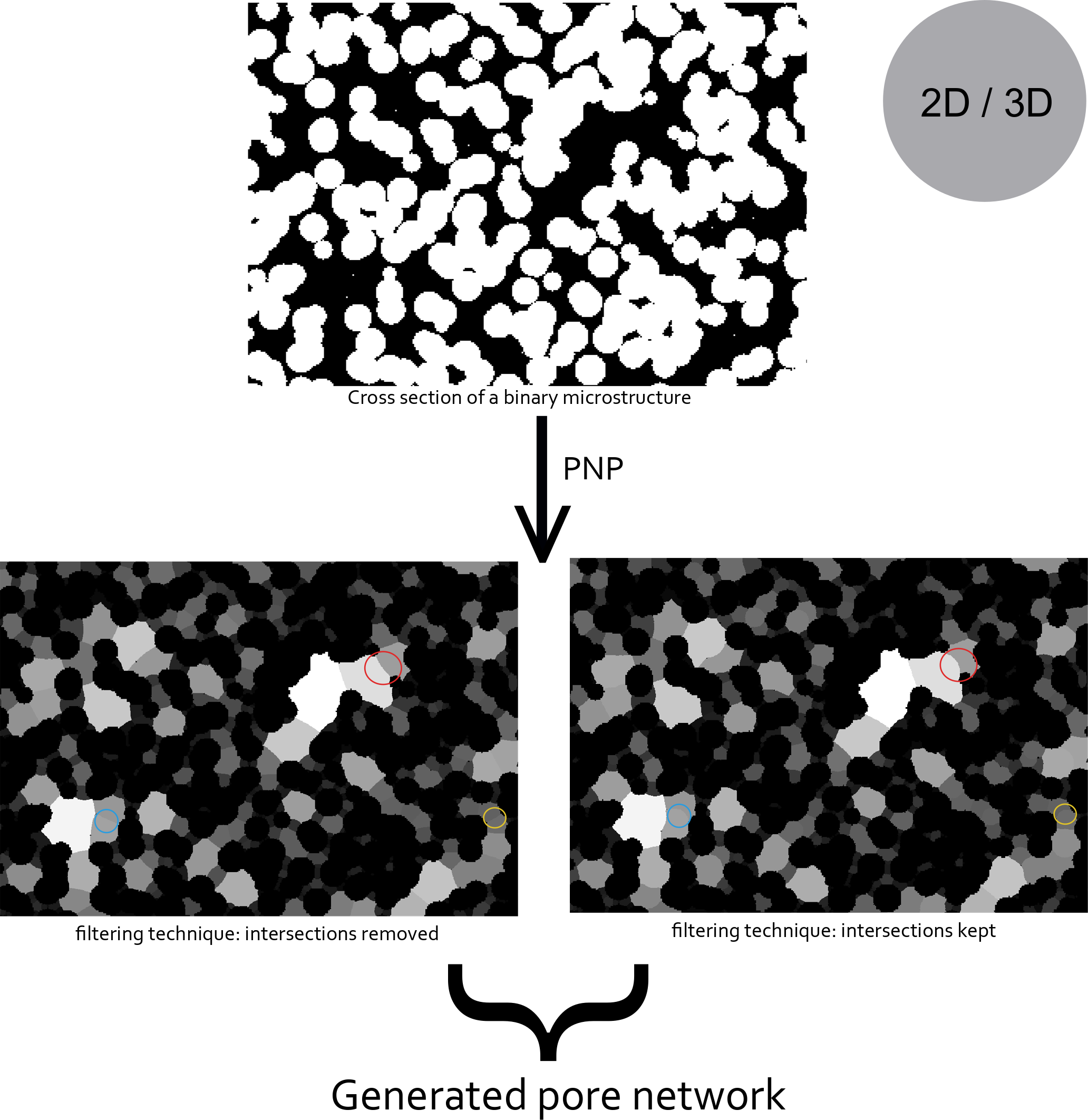
Pore network partitioning (PNP-2D/3D)
The pore network partitioning PNP is an efficient algorithm that allows the extraction of the pore network structure of a binary microstructure. It involves a distance map compuation in order to extract maxima points, a filtering process to generate different types of pores and a geodesic distance transform with...
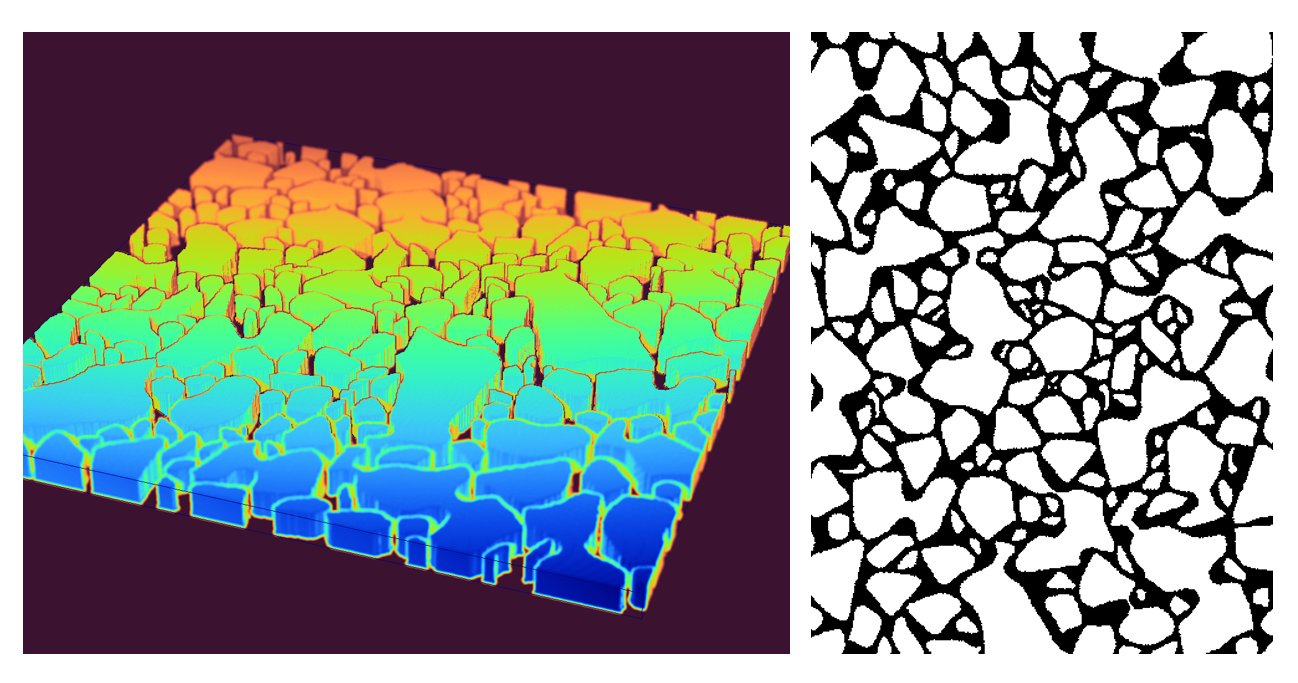
Digital rock replicator : on-demand generation of realistic porous media
Visualizing and studying (numerically or experimentally) pore-scale flow dynamics inside a porous media can be a fastidious and costly task especially when it came to realistic natural system. Micromodel in the other hand has been widely used to study pore-scale flow dynamics, yet with a lack of realistic...
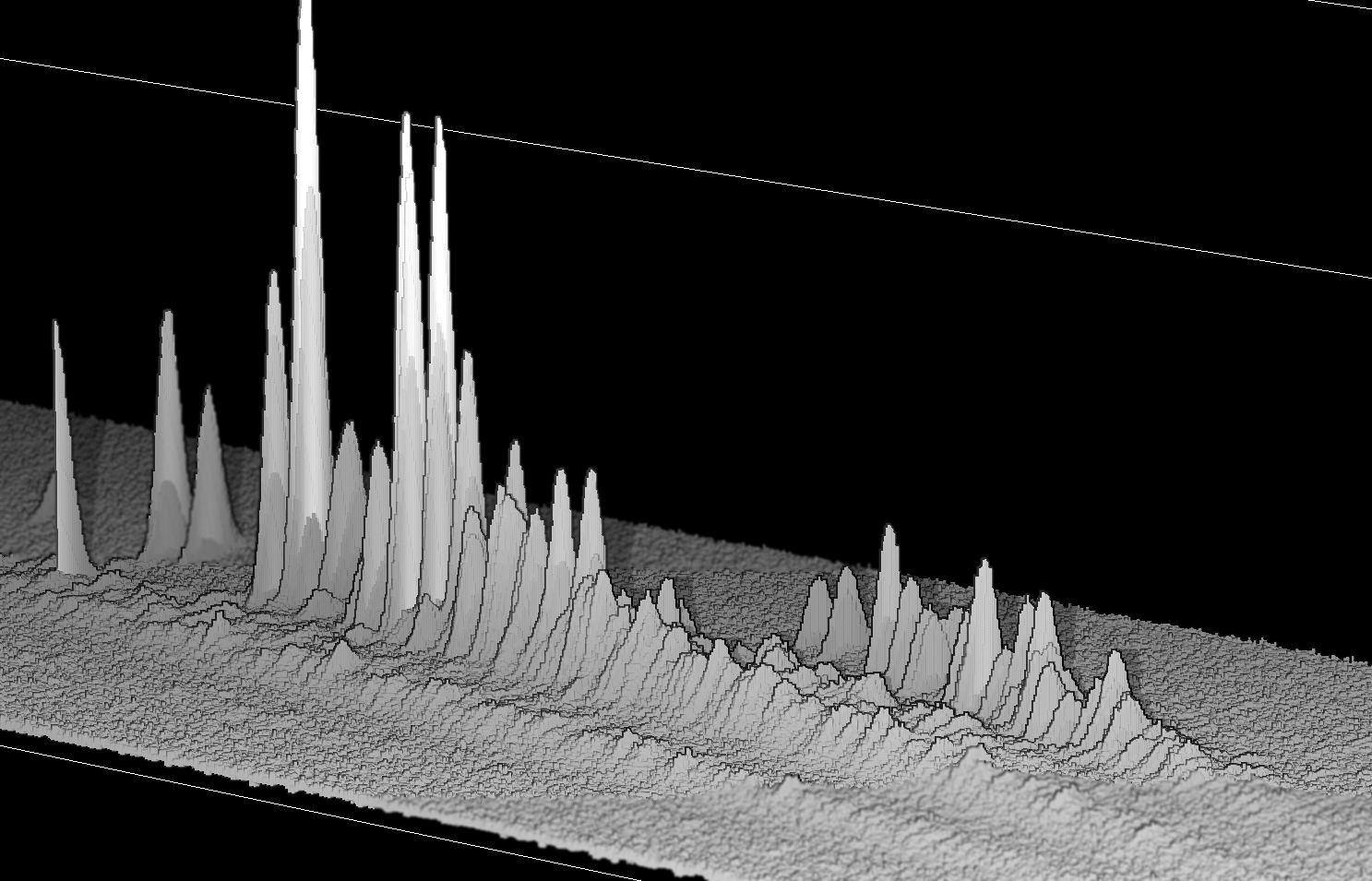
2D surface rendering
2D surface rendering on the CPU. The algorithm creates a 3D volume from intensity values then uses fast point projection and gradient calculation to give the impression of the visualization of an iso-surface with several 3D effects such as shadow and distance focus. A texture from another image can be mapped on the...
M-Tortuosity accelerated by IPSDK library
M-Tortuosity descriptor accelerated by IPSDK library, Reactiv'IP. This plugin requires Python environment 3.8 with numpy, pandas, black and mypy. This plugin requires installation of the IPSDK library (see link below). Install IPSDK library and follow Python installation instructions. Once installed,...
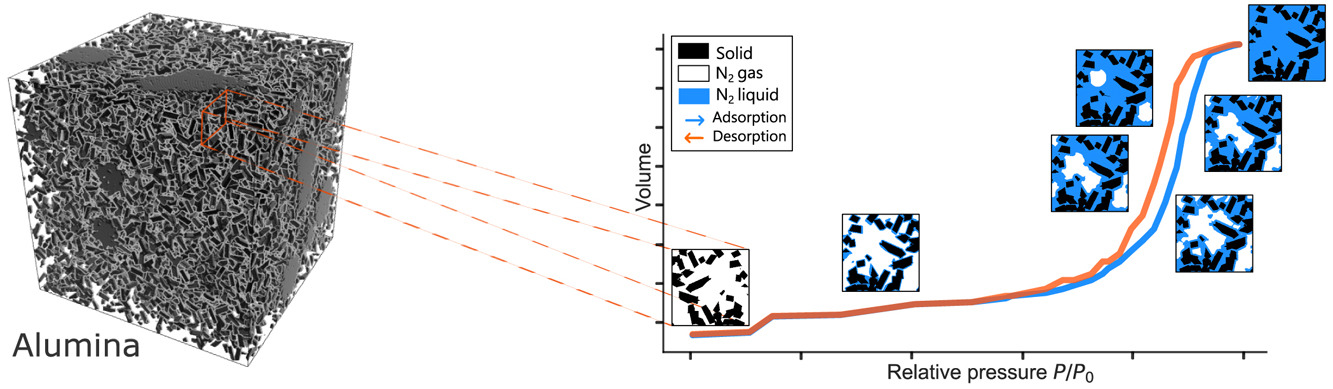
Morphology-preserving physisorption model
This module allows the computation of nitrogen adsorption-desorption isotherms. The method is based on the morphology-preserving adsorption model [1], in which, the simulation is done by newly developed adsorption and desorption operators operations that are based on mathematical morphology operators. An appropriate...
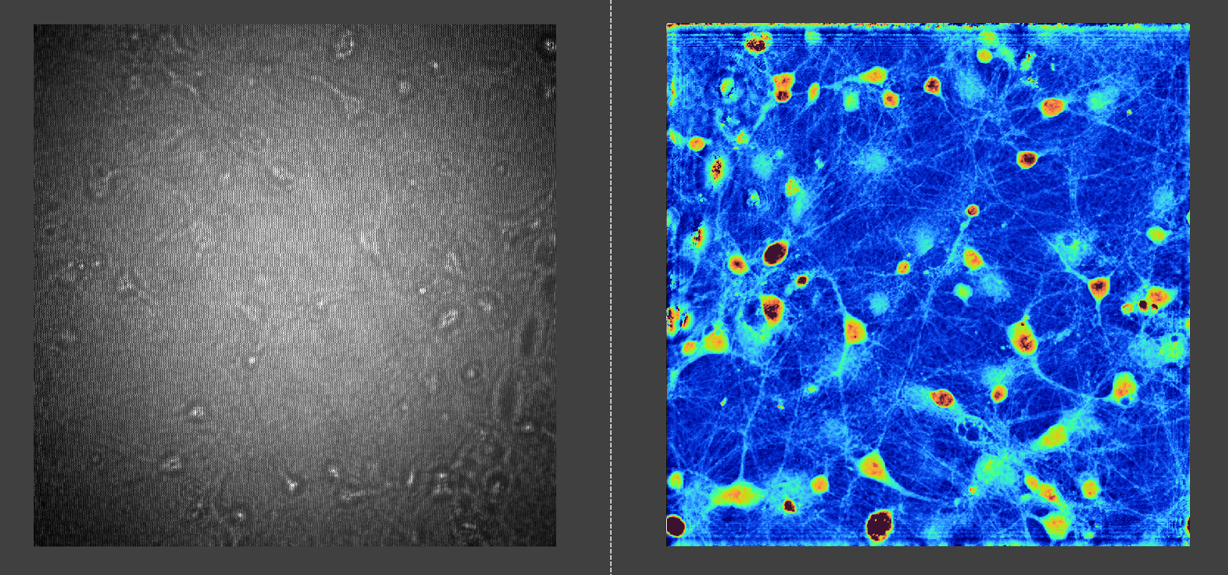
Hologram off-axis reconstruction
Digital hologram off-axis reconstruction [Nehmetallah, Banerjee, 2012] with spatial filtering for zero-order and twin-image elimination. The holograms must have a size in power of 2 (512x512, 1024x1024...). This plugin provides: o Fourier domain filtering visualization o Hologram automatic spatial filtering for...
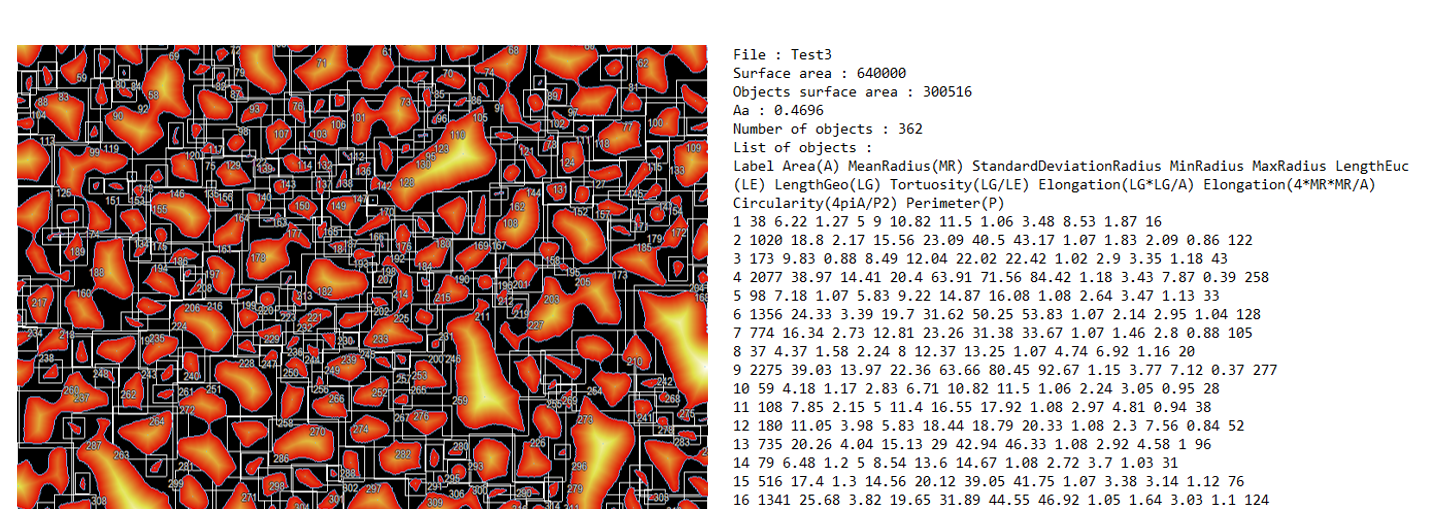
Morphological analysis and feature-based filtering
Compute various features from binary objects. This module provides an image identifying each object and a corresponding report in text format. The features returned are: area; minimum, maximum, mean and standard deviation equivalent radius; elongation criteria; circularity and perimeter. The features are processed by...
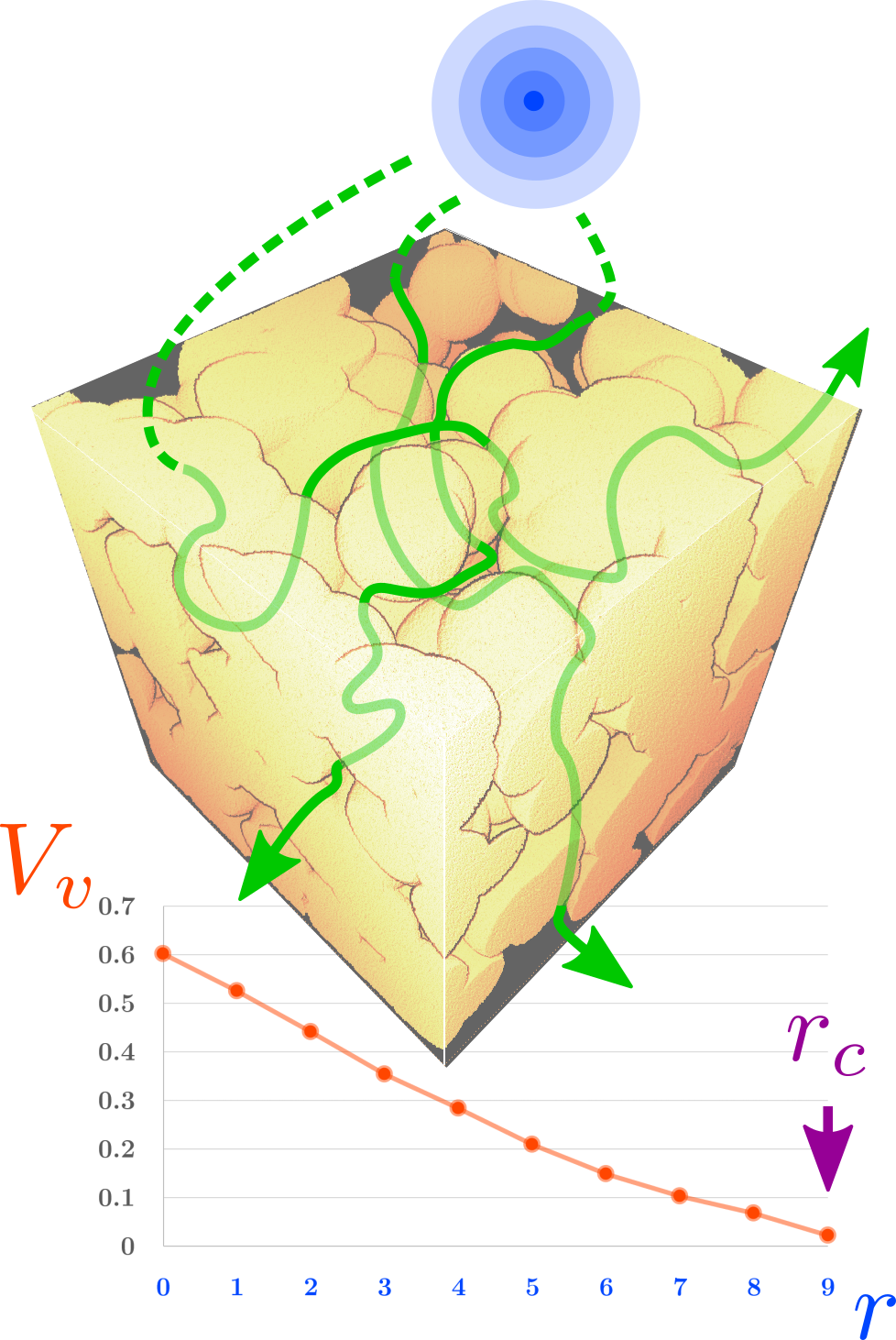
A-protocol
Computation of the A-protocol framework for the characterization of 3D microstructures. It addresses the descriptors-based characterization using dynamically the unifying concept of accessibility; the point version handles disconnections, hence is applicable on complex multi-scale microstructures. The A-protocol...
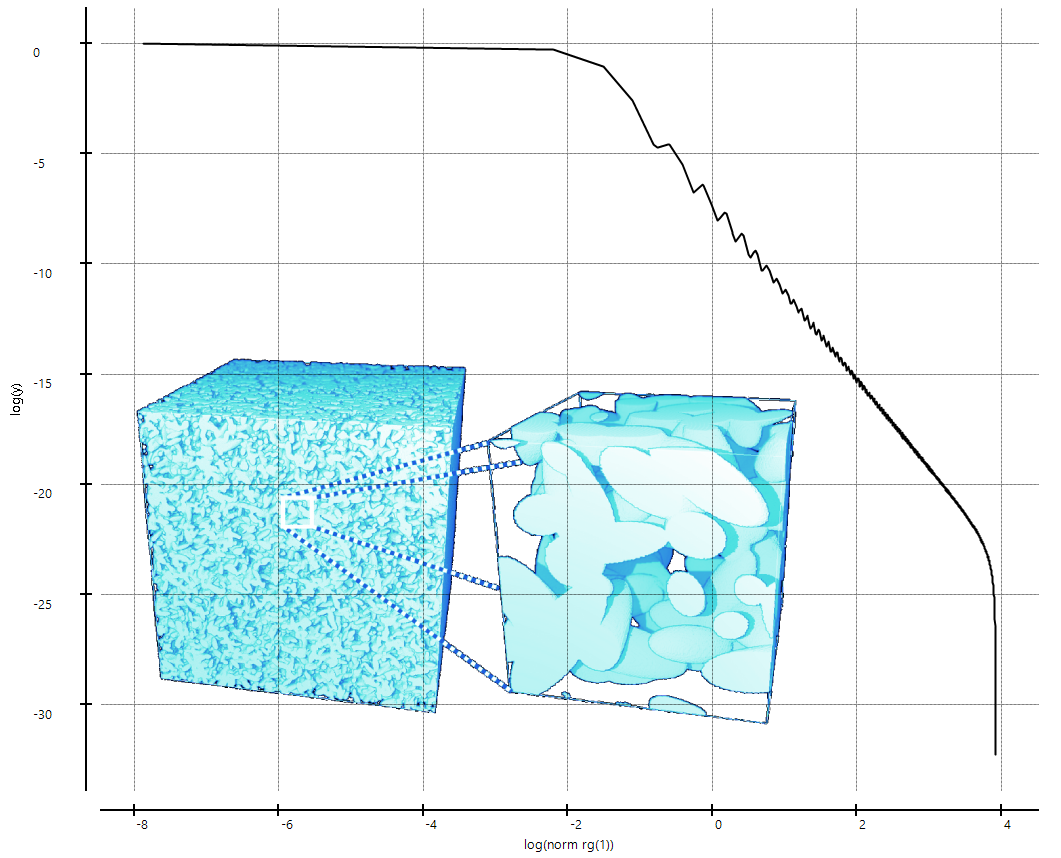
SAXS intensity of multiscale Boolean models of spheroids
Classical exploitation of the scattered intensities can be performed through form and structure factors or by means of Boolean models of spheres [1]. This plugin interprets the scattered intensities using multiscale Boolean models of spheroids, computing analytical covariance of multiscale models built from union and...
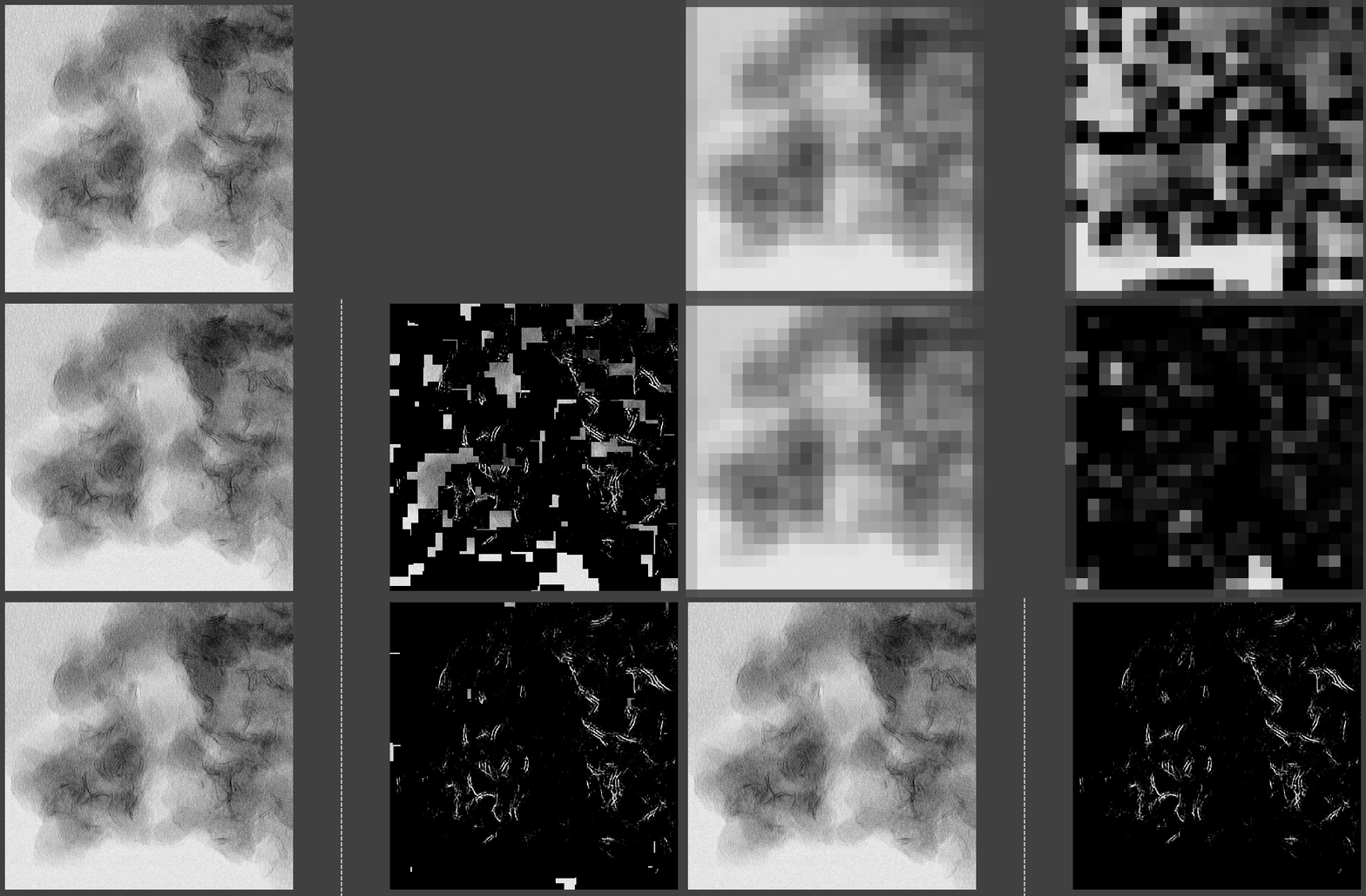
Semantic segmentation with deep learning, a comprehensive tutorial
Perform semantic segmentation using deep learning. This module makes a convolutional neural network (CNN) in ONNX format available directly inside plug im. The module performs patch-based stochastic inference, as described in Hammoumi et al. Neurocomputing 2020. (see link below). The calculation uses only the CPU and...
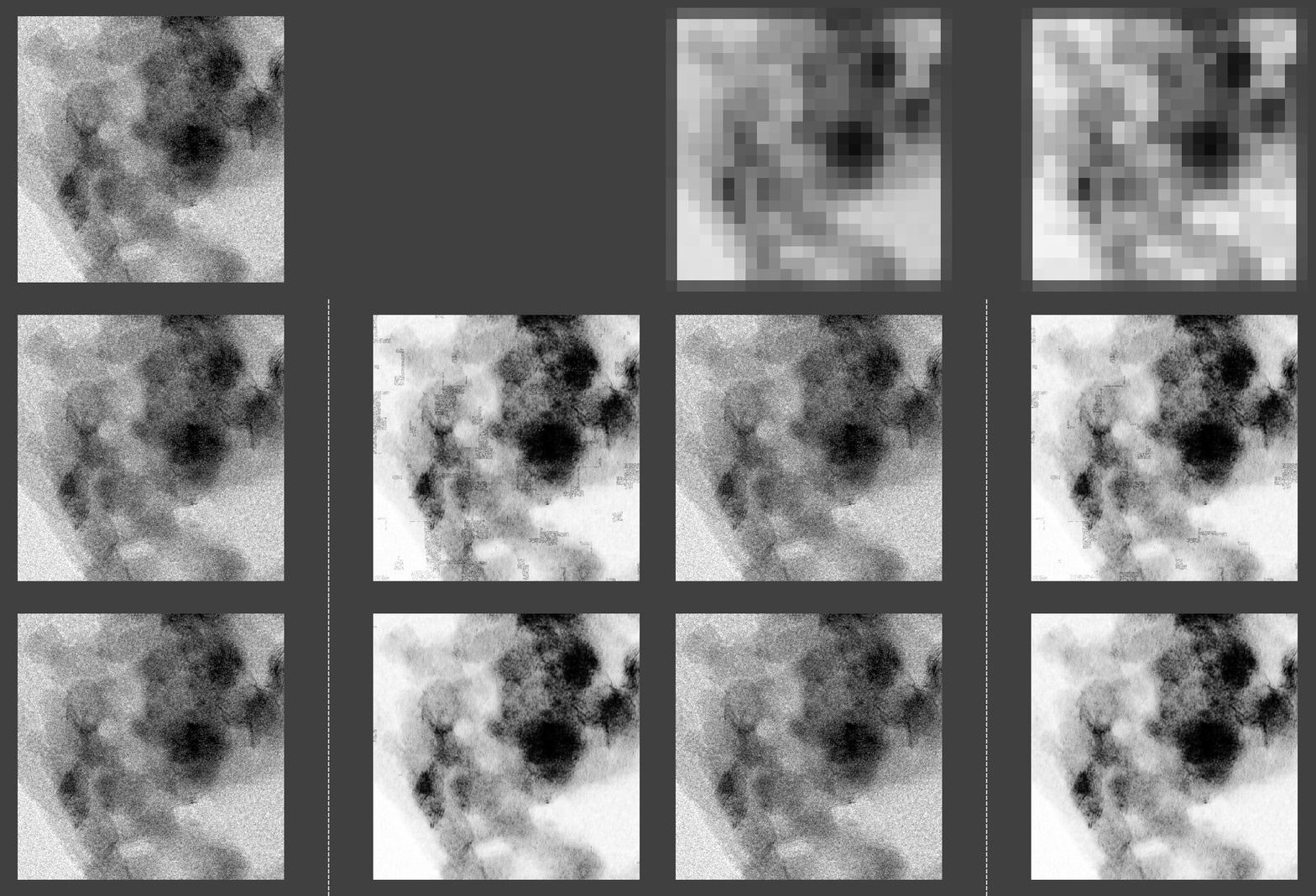
Noise reduction with deep learning, a comprehensive tutorial
Perform drastic noise reduction in your images using deep learning. This module makes a convolutional neural network (CNN) in ONNX format available directly inside plug im. The module performs patch-based stochastic inference, as described in Hammoumi et al. Neurocomputing 2020. (see link below). The calculation uses...
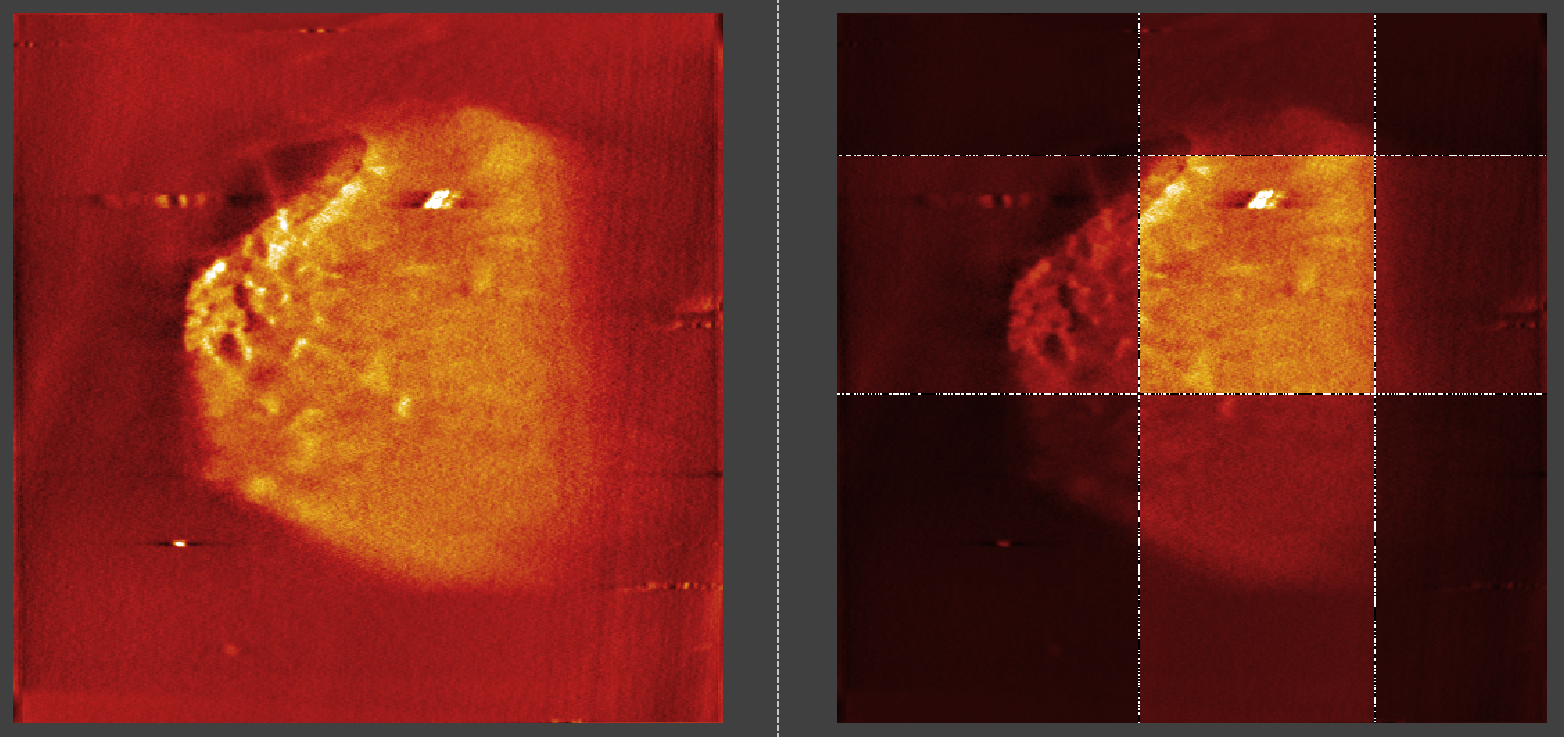
Selection of a sub image or sub volume
Select and extract sub image or sub volume. Updates: 20250212: Fixed y axis bug selection. 20241206: Fixed depth origin selection.
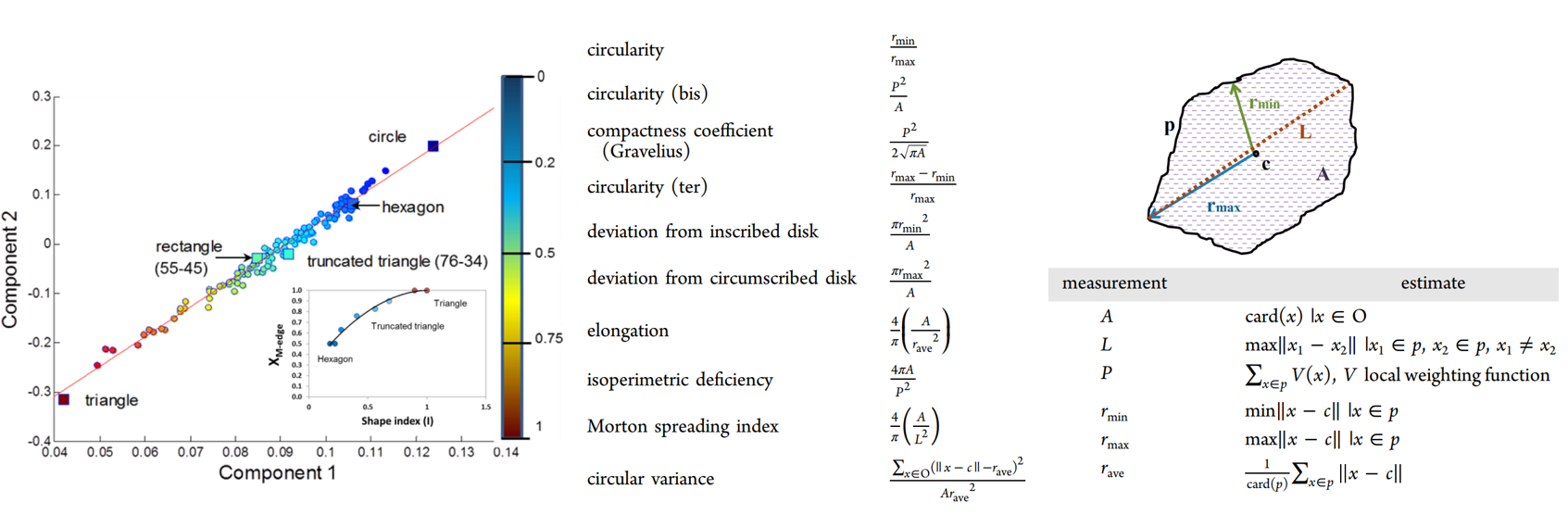
Shape index
This module provides a wide variety of 2D shape descriptors of binary objects, and a shape index. This shape index was determined by statistical analysis of the CoMoS nanolayers shapes principal component analysis processing identified from HR HAADF-STEM images. This shape index, reflecting the isotropic/anisotropic...
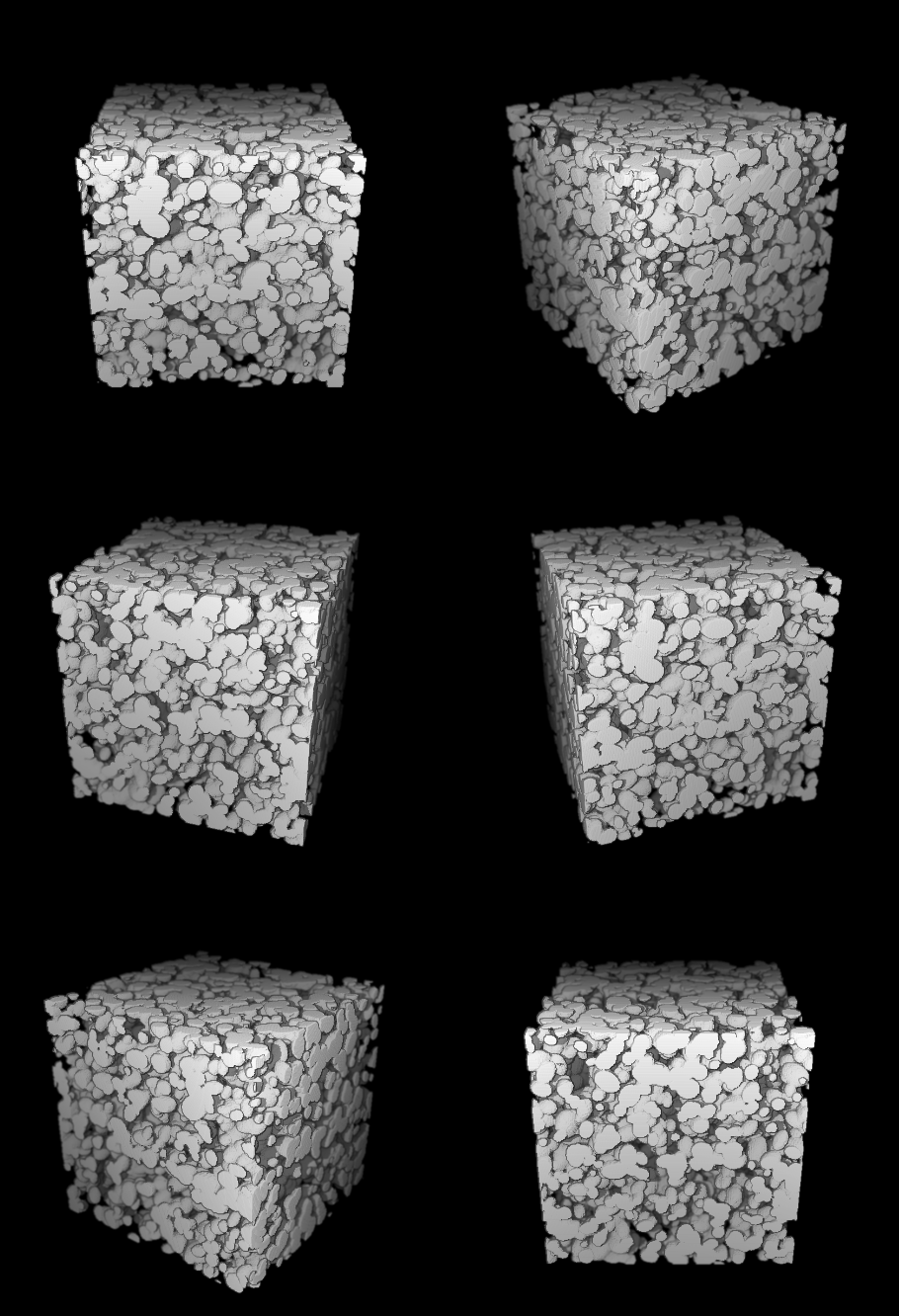
Multi-scale microstructures with ellipsoidal grains
This plugin provides a model for the generation of multiscale microstructures with ellipsoid primary grains on the basis of the Cox-Boolean model. This model integrates principles of stochastic geometry and Boolean operations to simulate complex microstructural arrangements. The model allows to generate...
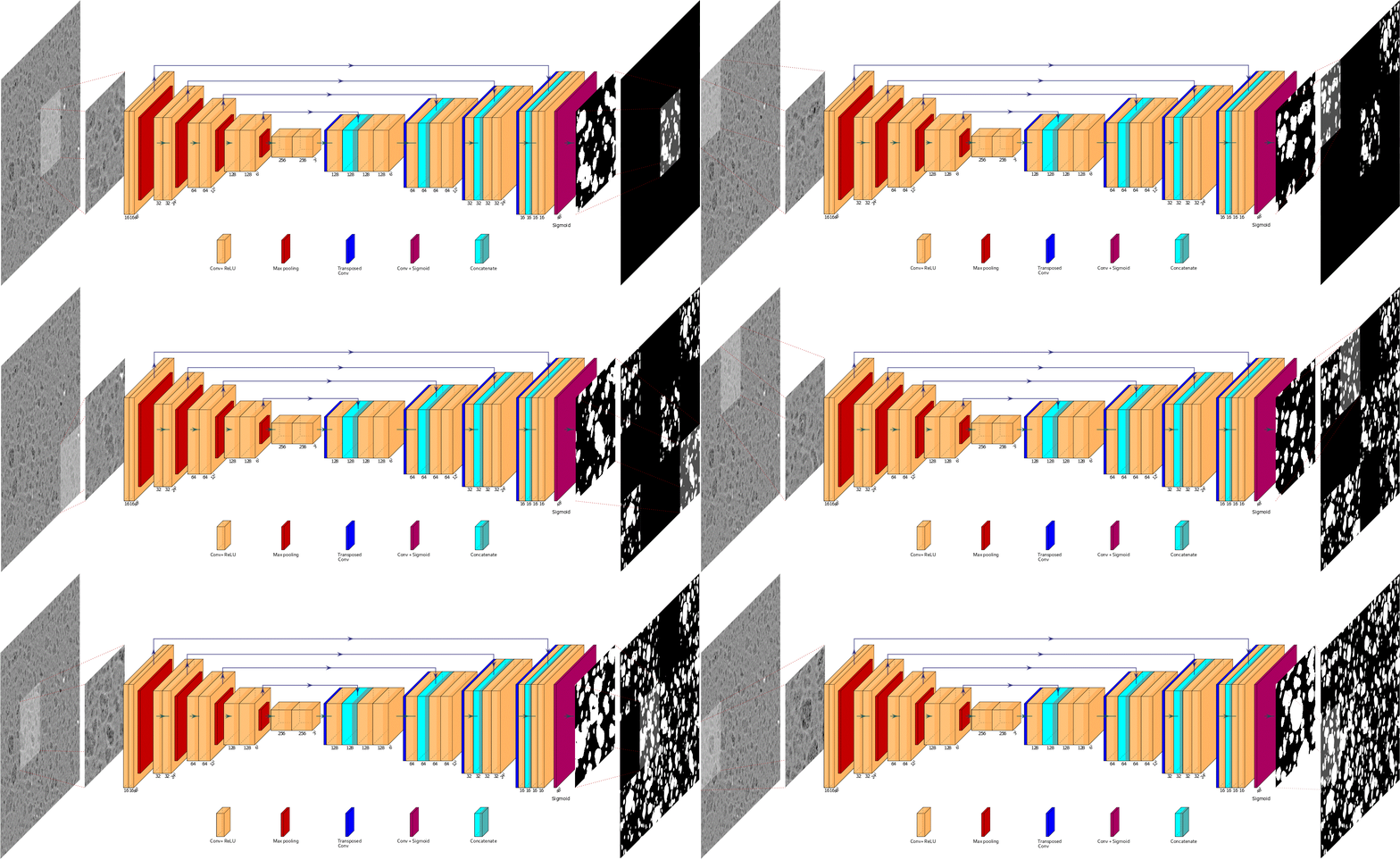
Alumina spatial hetereogeneity quantification assisted by deep learning
This module provides deep learning semantic segmentation propoped in [1] for the quantification of spatial hetereogeneity of Gamma Alumina from SEM images. The architecture is a standard Unet encoder decoder [2], with a supervised training and inference using stochastic patches procedure [3]. In [1] results is then...
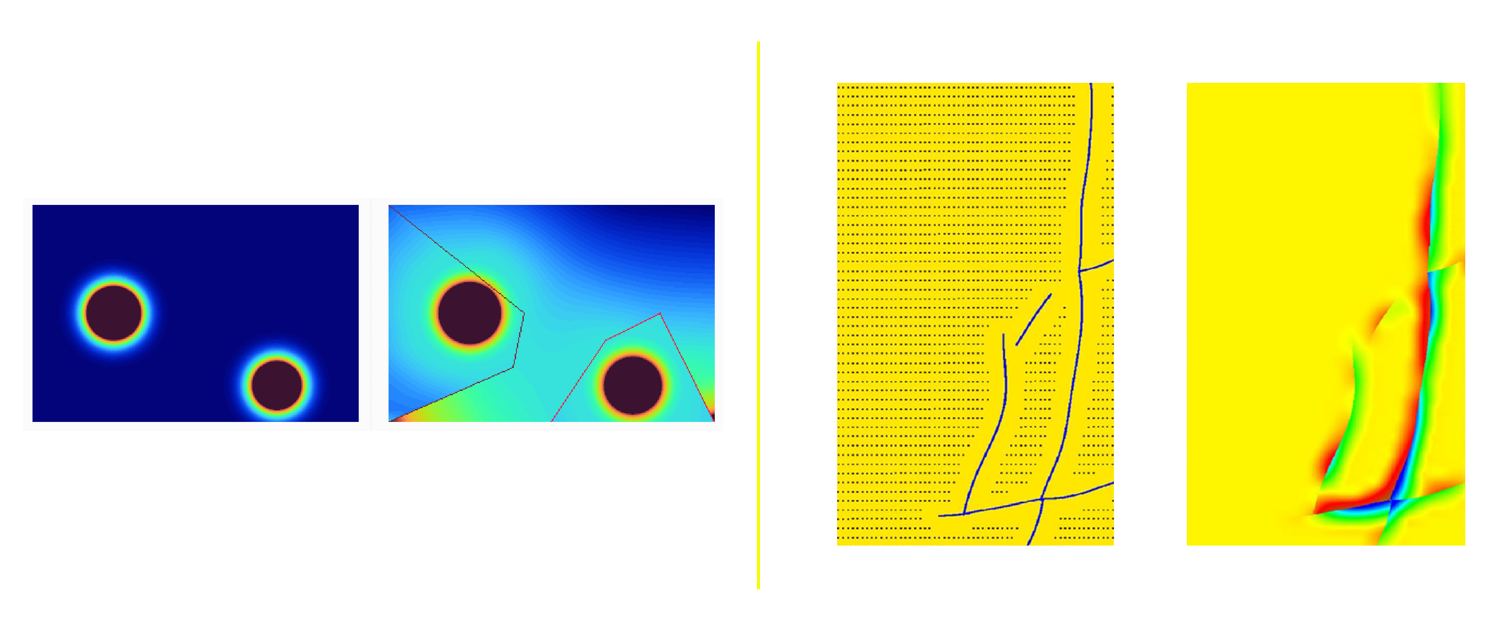
Smooth surface interpolation method capable of handling discontinuities
This module proposes a smooth surface interpolation method capable of handling discontinuities such as faults on a regular mesh. Based on multi-scale minimisation of the second gradient using a conjugate gradient solver, this approach can process millions of points in a few seconds on a standard workstation. The...
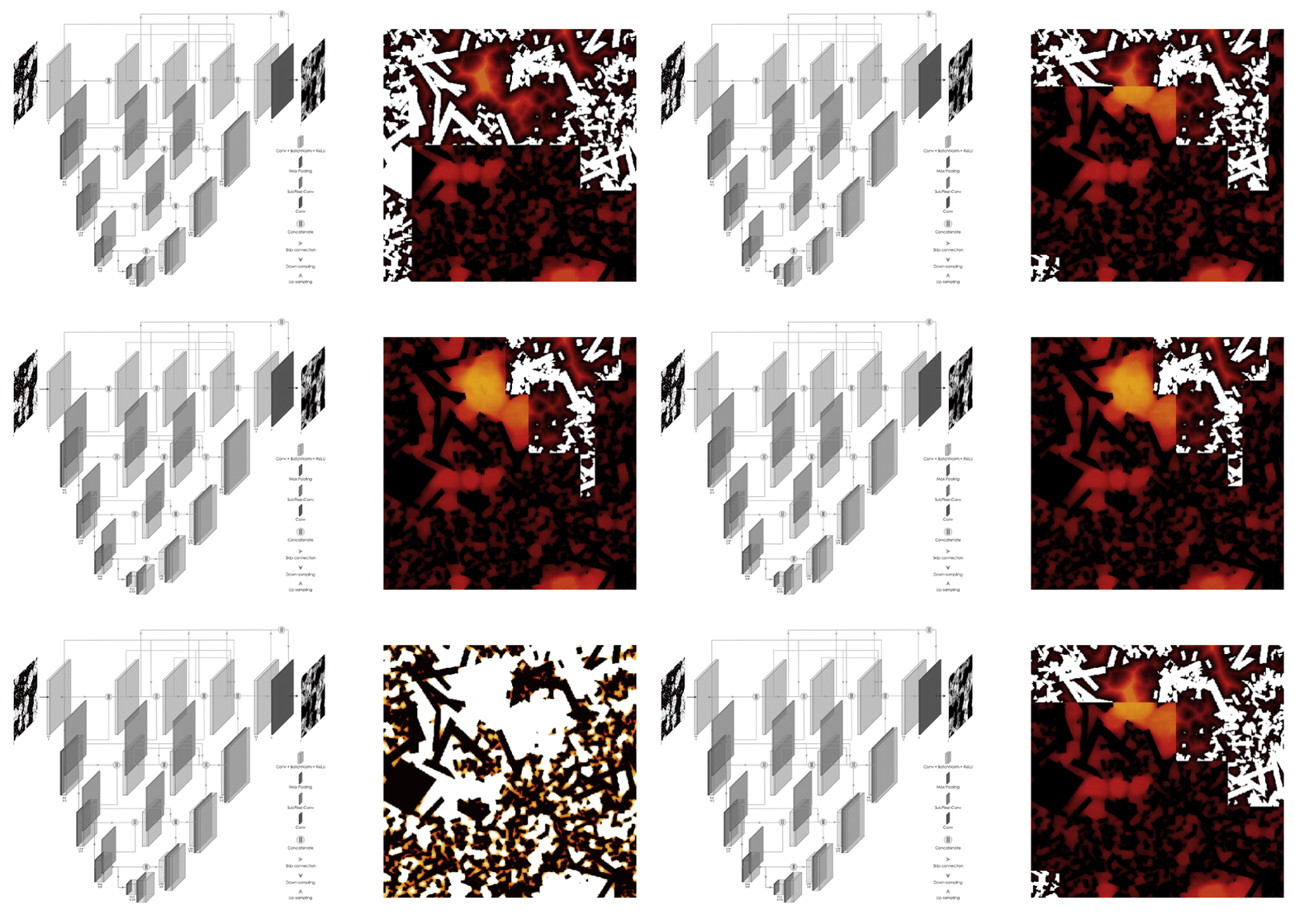
ADS-net: Accelerated Physisorption Prediction via Deep Learning
ADS-net* enables the rapid calculation of adsorption maps for the prediction of physisorption isotherms. It is based on a morphological adsorption model** that simulates gas molecule adhesion by dilation operations (adsorbed multilayer film) and gas condensation by critical pore size detection by closing operations....